
What MERV Rating for Your AC Filter? Get It Right
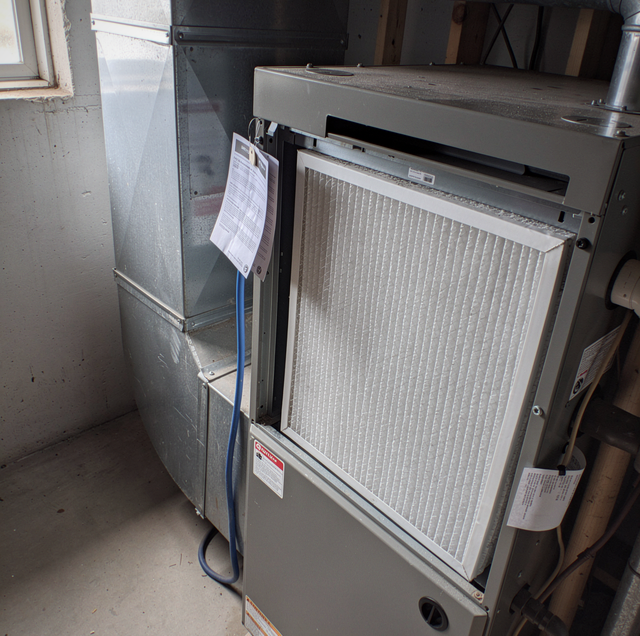
Quick Answer: For most homes, a MERV 8 to 13 filter is the practical range. It captures dust, pollen, and pet dander without choking the airflow a standard residential blower depends on. Very high MERV or true HEPA filters catch finer particles but can restrict airflow enough to strain the system, so confirm what your equipment can handle before jumping to the top of the scale.
Standing in the filter aisle with a wall of cardboard-framed rectangles in front of you, each one stamped with a different number, is a familiar kind of stuck. One box promises to trap more. Another warns about allergens. The number that matters most on that label is the MERV rating, and picking the wrong one does more than waste money. It can quietly work against the AC system it is supposed to protect.
What MERV Actually Measures
MERV stands for Minimum Efficiency Reporting Value. It is a standardized scale that rates how well a filter captures airborne particles as air passes through it. The scale runs from 1 to 16 for the filters used in homes, and the higher the number, the smaller the particles the filter can trap.
Filters are tested against particle sizes measured in microns, from coarse debris down to fine smoke and bacteria. A low-MERV filter catches the big stuff: lint, carpet fibers, larger dust. As the number climbs, the filter media gets denser and starts catching pollen, mold spores, pet dander, and eventually very fine particles like smoke and some bacteria.
Here is the plain-English version of the residential range:
MERV 1 to 4: Bare minimum. These flat fiberglass panels protect the equipment from large debris and little else. They let most household allergens pass right through.
MERV 5 to 8: The common pleated filters most homes ship with. MERV 8 handles dust, pollen, mold spores, and lint well, and it is the floor most HVAC pros consider acceptable for both air quality and equipment protection.
MERV 9 to 12: A meaningful step up. These capture finer dust, pet dander, and some smaller allergens. MERV 11 to 13 is where households with allergies or pets usually land.
MERV 13: The practical ceiling for most residential systems. It catches a large share of fine particles, including some smoke and airborne particles that carry allergens, while still passing enough air for a standard blower to breathe.
MERV 14 to 16: Hospital and commercial territory. Excellent filtration, but the media is dense enough that a typical home system was never engineered to pull air through it.
The Tradeoff Nobody Puts on the Box
A finer filter catches more, and that sounds like a reason to always buy the highest number available. The catch is airflow. Every filter restricts the path your air travels, and denser media resists airflow more. Your residential blower motor was sized to push a specific volume of air against a specific amount of resistance. Ask it to pull air through a filter far denser than it was designed for, and something has to give.
Running an AC with a straw instead of an open pipe is close to what an oversized MERV filter does to a system built for moderate resistance. The blower strains, less air moves across the coils, and the whole system works harder to do the same job. Reduced airflow can drop the temperature at the evaporator coil far enough that it ices over, and a frozen coil stops cooling entirely. Over time, the added strain shortens the life of the blower motor and can push the system into short-cycling.
This is the part that surprises people: a filter marketed as the healthiest option can, on the wrong system, make the equipment run worse and the air move less. Filtration and airflow pull in opposite directions, and the right MERV is the one that balances them for your specific equipment.
Why MERV 8 to 13 Is the Usual Sweet Spot
For the majority of homes, the answer lands between MERV 8 and MERV 13. That band captures the particles that actually bother people: dust, pollen, dander, mold spores, without crossing into the density that starves a standard blower.
Where you fall inside that band depends on the household:
No allergies, no pets: MERV 8 to 11 is plenty. You get solid dust and pollen capture and the easiest airflow.
Allergy sufferers or pets in the home: MERV 11 to 13 pulls out the finer dander and pollen that trigger symptoms.
Someone with respiratory sensitivity: MERV 13 is the top of the sensible residential range and a common recommendation, provided the system can handle it.
Allergen loads shift through the year, heavier pollen in some months, more indoor dust and dander when the house is closed up in others, but the airflow your system can support does not change with the calendar. That is why the choice is driven by your equipment first and the season second. A filter that strains the blower in July strains it in January too.
Filter Thickness Changes the Whole Equation
The MERV number is only half the story. The other half is how thick the filter is, and this is where many homeowners get the wrong impression.
A 1-inch filter has a thin band of pleated media. To hit a high MERV in that little depth, the media has to be packed tight, which raises airflow resistance sharply. A high-MERV 1-inch filter is the most likely to strain a system.
A 4-inch or 5-inch media filter, the kind that sits in a dedicated wider cabinet, has far more surface area. The pleats are deeper, and there is more media for the air to spread across, so it can reach MERV 11 to 13 with much less resistance than a 1-inch filter at the same rating. The extra surface area is also why these thicker filters load up slower and get swapped less often.
If your system has a thick-media cabinet, higher filtration is far more feasible. If you only have a 1-inch slot, aiming for the very top of the MERV scale is where airflow problems usually start.
How Often to Replace It
A filter only works while it has room to breathe. As it loads with debris, resistance climbs, and a clogged filter causes the same airflow problems as an oversized MERV rating. Replacement frequency is not one-size-fits-all:
• A 1-inch pleated filter generally needs changing every 60 to 90 days, sooner with pets or heavy use.
• A 4-inch or 5-inch media filter often runs 6 to 12 months thanks to the larger surface area.
• Homes with shedding pets, multiple occupants, or heavy AC runtime should check monthly and change on the shorter end.
Hold the filter up to a light. If you cannot see light through it, it is done and needs replacing, regardless of what the calendar says.
MERV vs MPR and FPR: Decoding the Other Labels
Part of the aisle confusion comes from filters that do not print a MERV number at all. Two big retail brands use their own scales instead.
MPR (Microparticle Performance Rating) is a proprietary scale that runs into the thousands and focuses on the smallest particles. An MPR of 1000 to 1200 lands near MERV 11; MPR 1500 to 1900 sits around MERV 12 to 13.
FPR (Filter Performance Rating) is another proprietary scale, running 1 to 10, used by one large home-improvement retailer. FPR 7 is roughly MERV 11; FPR 10 is roughly MERV 13.
MERV is the only independent, industry-standard scale, so use it as your anchor. When a filter shows only MPR or FPR, translate it back to the MERV equivalent before deciding whether your system can handle it.
Changing a filter is a homeowner-safe job with no tools and no electrical work. The one judgment call worth handing to a professional is the ceiling: how high a MERV your specific blower and return ductwork can support without restricting airflow. If you are unsure whether your system can take a higher rating, have a technician confirm before you commit to it.
Frequently Asked Questions
Not much. MERV rates particle capture, and gaseous odors from cooking or paint are molecules far smaller than any residential filter targets. Even MERV 13 does little for smells. Odor control needs an activated-carbon filter, which works by adsorption rather than by trapping particles, and carbon is a separate feature from the MERV rating entirely.
You can, but reusable electrostatic filters typically rate around MERV 4 to 8, so filtration is on the lower end. Their real weak point is upkeep: they must be rinsed and, importantly, fully dried before reinstalling. A filter put back while still damp becomes a breeding surface for mold inside the ductwork, which then circulates through the house.
Pressure drop is the measured resistance a filter adds, expressed in inches of water column. Every filter has an initial pressure drop that rises as it loads with dust. Many blowers built in the last decade are variable-speed and will ramp up to compensate for a restrictive filter, which quietly raises the electricity the unit draws. Filter packaging sometimes lists this figure, and a lower number means easier breathing for the system.
It can. Many manufacturers specify a maximum static pressure the system is rated for, and installing a filter dense enough to exceed it can be grounds for a denied warranty claim if a strained blower or motor fails. Keeping the filter within your system's rated pressure is part of staying inside those warranty terms.
Yes. Every framed filter has an airflow arrow printed on the cardboard edge, and it must point in the direction the air travels, toward the blower and away from the return grille. Installed backward, the pleats face the wrong way, the filter loads unevenly, and it loses efficiency well before it should. Mark the arrow direction on the duct with a marker so future changes are foolproof.
Temporarily, yes. Fine smoke particles fall in the range MERV 13 captures well and lower ratings largely miss. During a smoke event, a MERV 13 filter (if your system supports it) plus a portable HEPA air cleaner in the rooms you use most is the practical combination, since a portable unit can run true HEPA without touching your central system's airflow.
Not sure how high your system can safely filter? Get an honest airflow check before you upgrade. Fix My Air DFW serves Fort Worth and the DFW metro. TACLA33709C. Call (817) 439-9811.
