
How a Heat Pump Works: One System, Two Jobs
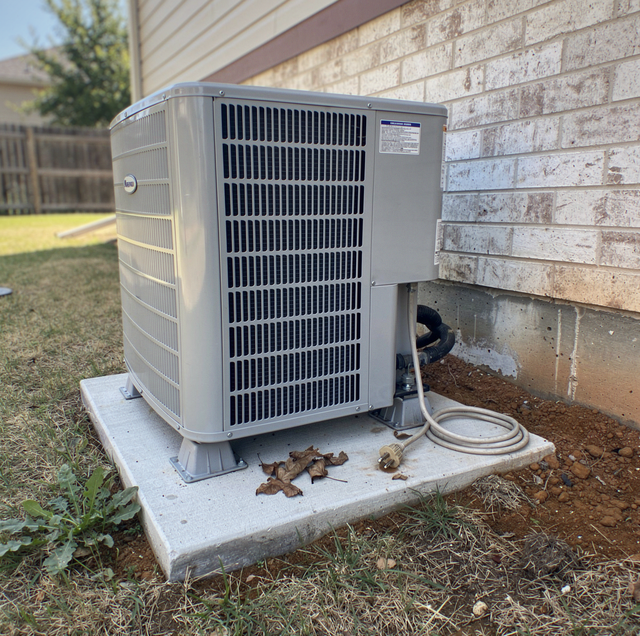
Quick Answer: A heat pump is a single system that both heats and cools by moving heat instead of burning fuel to create it. In summer it carries heat out of your house; in winter it reverses and carries heat from the outdoor air inside. Refrigerant, a compressor, two coils, and a reversing valve do the work.
Most home comfort equipment does one job. A furnace burns gas to make heat. An air conditioner runs a cooling cycle. A heat pump is unusual because the same box handles both, and it does so without ever making heat from scratch. The idea that trips people up is simple once it clicks: a heat pump does not create warmth or cold; it relocates heat from one place to another. Understanding that one move explains everything else about how the equipment behaves.
Moving Heat Instead of Making It
Heat always drifts from warmer things toward cooler ones. A heat pump borrows that behavior and puts it on a leash. Inside the system runs a refrigerant, a fluid engineered to absorb heat when it evaporates and release heat when it condenses. By controlling where the refrigerant evaporates and where it condenses, the system decides which direction heat travels.
A useful comparison is a sponge and a bucket. The refrigerant soaks up heat in one spot like a sponge pulling in water, then gets carried to another spot and wrung out. Nothing is being manufactured. The same heat is simply picked up here and set down there. In cooling mode, the sponge soaks up heat inside your home and wrings it out into the yard. In heating mode, it soaks up heat from the outdoor air, even chilly air, and wrings it out indoors.
That is why the equipment can run both directions. The hardware does not know or care whether it is summer or winter. It only knows which way to send the heat, and a single component decides that.
The Refrigerant Cycle, Step by Step
Four core parts do the heavy lifting: two coils, a compressor, and an expansion device. The refrigerant loops through all of them continuously.
The evaporator coil is wherever heat is being collected. Low-pressure liquid refrigerant enters this coil cold. Air blows across it; the refrigerant absorbs heat from that air and boils into a gas. The air leaving the coil is now cooler than it was.
The compressor is the pump at the center of the system. It squeezes the low-pressure gas into a hot, high-pressure gas. Compressing a gas packs its heat into a smaller space and raises its temperature well above the air it is about to meet, which is what lets the next coil dump that heat.
The condenser coil is where heat is being released. The hot, high-pressure gas flows through it, air moves across the coil, and the refrigerant gives up its heat and condenses back into a liquid. The air leaving this coil is now warmer.
The expansion device then drops the liquid's pressure sharply, which also drops its temperature, so it returns to the evaporator cold enough to absorb heat again. The loop repeats.
Here is the part worth holding onto: the two coils do not have fixed jobs. Which coil acts as the evaporator and which acts as the condenser depends entirely on the direction the refrigerant is flowing. That direction is set by one valve.
The Reversing Valve Flips the Whole System
The reversing valve is the component that makes a heat pump different from a plain air conditioner. It is a switch in the refrigerant path that changes which way the refrigerant travels through the loop.
In cooling mode, the indoor coil is the evaporator (collecting heat from your rooms), and the outdoor coil is the condenser (dumping that heat outside). Flip the reversing valve and those roles swap. Now the outdoor coil becomes the evaporator, pulling heat out of the outside air, and the indoor coil becomes the condenser, releasing that heat into your home. The compressor, the refrigerant, and the coils are all the same. Only the direction changed.
This is also why a heat pump in cooling mode behaves exactly like a central air conditioner, because mechanically it is one. The heating capability is what the reversing valve adds on top.
Why It Is So Efficient
Efficiency is the reason heat pumps get attention. A resistance heater, like a space heater or the coil in an electric furnace, turns electricity directly into heat. Every unit of electricity becomes roughly one unit of heat. That is a hard ceiling.
A heat pump does not spend its electricity making heat. It spends electricity running a compressor and fans that move heat that already exists in the air. Because moving heat takes far less energy than generating it, a heat pump can deliver two to three units of heat indoors for every unit of electricity it draws, under favorable conditions. The heat itself is free; you are only paying to relocate it.
That advantage runs in both directions. The same move-heat-instead-of-make-it principle is why the cooling side is efficient too, and why a single system covering both seasons often uses less energy overall than separate heating and cooling equipment.
What Happens When It Gets Cold
Colder outdoor air holds less available heat, so a heat pump's heating capacity naturally drops as the temperature falls. The system still pulls heat from cold air; it just extracts less of it, and the compressor has to work harder to do so. This is normal physics, not a malfunction.
Two things happen as temperatures fall. First, the outdoor coil can collect moisture from the air and frost over, because that coil is running colder than the outside air. To handle this, the system runs a defrost cycle: it briefly reverses to cooling mode to warm the outdoor coil and melt the frost, then switches back. You may see steam rising off the outdoor unit and feel a short pause in warm air during defrost. That is expected. A thin layer of frost that clears on its own is normal. A thick, persistent buildup of ice, or a unit blowing cold air with no heat, is not, and needs a technician.
Second, when the outdoor air gets cold enough that the heat pump alone cannot keep up, a backup heat source steps in. Depending on the setup, that backup is either electric resistance heat strips (auxiliary or emergency heat) or, in a dual-fuel system, a gas furnace. Dual-fuel setups let a controller hand off to gas when the heat pump becomes the less economical choice, then return to the heat pump when conditions improve. Either way, the backup is there so comfort never depends solely on the pump's coldest-weather performance.
Air-Source Versus Ground-Source
The systems described so far are air-source heat pumps, which exchange heat with the outdoor air. They are the common residential type because they install on a standard outdoor pad and work with existing ductwork.
Ground-source (geothermal) systems work on the exact same move-heat principle but swap the heat partner. Instead of the outdoor air, they exchange heat with the ground through buried loops of piping. A few feet down, soil temperature stays remarkably steady across seasons, so a ground-source system draws from a warmer source in winter and rejects heat to a cooler sink in summer than the outdoor air offers. That steadier partner makes them efficient in extreme conditions, at the cost of a larger, more involved installation. For most homes, the air-source concept is what applies day to day.
Maintenance Basics
A heat pump runs year-round rather than half the year, so upkeep matters more, not less.
Change the air filter on schedule: A clogged filter starves airflow across the indoor coil, which drags down both heating and cooling performance and strains the compressor. Check it monthly during heavy use and replace it as needed. This is homeowner-safe work.
The outdoor coil has to breathe. Keep a couple of feet of clearance on all sides, and gently rinse visible debris off the coil fins with a garden hose while the unit is off.
Anything involving the refrigerant charge is EPA-certified work, both by law and by safety. An undercharged or overcharged system quietly wrecks efficiency and can damage the compressor, so leave the sealed system to a licensed technician rather than attempting a DIY refrigerant top-off.
Frequently Asked Questions
Not necessarily. Many older systems used R-22, which has been phased out of new production, while current equipment commonly uses R-410A and newer low-global-warming-potential blends such as R-454B. The refrigerant type is stamped on the outdoor unit's data plate, and it dictates which service parts and recovery equipment a technician must use, which is one more reason charge work is not interchangeable across systems.
A typical defrost cycle runs only a few minutes, often somewhere between three and ten, and ends automatically once the outdoor coil sensor reads warm enough. Modern controls use demand-based logic that triggers defrost only when frost is actually detected, rather than on a fixed timer, which avoids wasting energy on unnecessary cycles. If your unit seems stuck defrosting repeatedly or for long stretches, the defrost sensor or control board may be the culprit.
The same principle scales to water. Heat-pump water heaters pull heat from surrounding air to warm a tank, and dedicated pool heat pumps move heat from the air into pool water, both using the identical evaporator-compressor-condenser loop. They are separate appliances from your home comfort system, but they prove the concept is about moving heat between any two mediums, not just air to air.
SEER2 measures cooling efficiency over a season, and HSPF2 measures heating efficiency, both updated testing standards that replaced the older SEER and HSPF numbers. Higher figures mean more comfort delivered per unit of electricity. A system carrying strong ratings in both tells you it was engineered to perform in both modes, which matters for equipment that runs year-round rather than just one season.
Long, steady run times are normal and usually a good sign. A heat pump delivers heat at a lower, gentler supply temperature than a gas furnace's hot blast, so it runs longer to reach the same setpoint while holding temperature more evenly and avoiding the frequent on-off swings that stress equipment. Variable-speed and two-stage models take this further by running at low output for hours, which is more efficient than repeated hard starts.
You can, but it is rarely the right first move. Emergency heat locks the system into the backup electric strips or furnace and shuts off the efficient heat pump entirely, so running it needlessly raises your energy use sharply. Reserve it for when the heat pump has truly failed or iced over and you are waiting on service. If the pump is merely working hard on a cold day, that is the system doing its job, not a reason to switch over.
Book a heat-pump tune-up before the season turns — keep both heating and cooling running all year efficiently. Fix My Air serves Fort Worth and the DFW metro. TACLA33709C. Call (817) 439-9811.
