
Cracked Furnace Heat Exchanger? 6 Warning Signs to Know
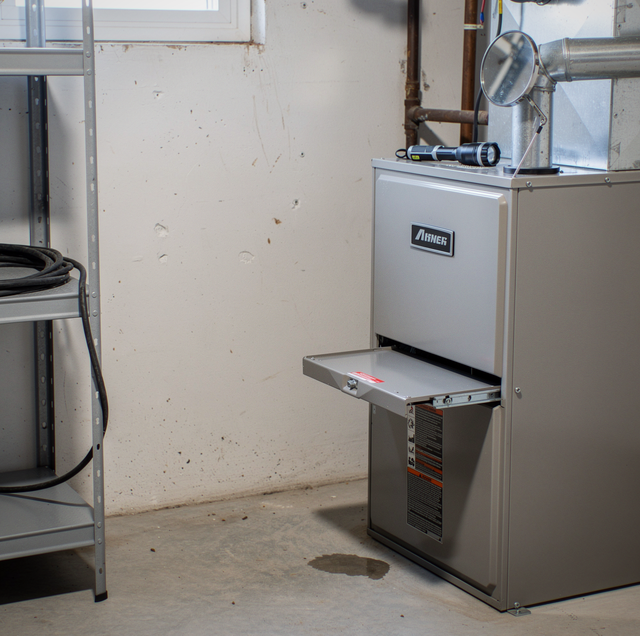
What A Heat Exchanger Does And Why A Crack Is Dangerous
A furnace does not heat your home by mixing flame with the air you breathe. The burners ignite inside a sealed metal chamber called the heat exchanger, and the hot combustion gases pass through that chamber while your blower pushes household air across its outer surface. The metal transfers heat into the air stream; the exhaust gases, including carbon monoxide, stay sealed inside and exit through the flue. That separation is the entire safety design of a gas furnace in one part.
A crack, pinhole, or seam failure in that metal breaks the separation. Once the exchanger is compromised, combustion byproducts can mix with the air the blower distributes through your ducts instead of venting outside. Carbon monoxide is colorless and odorless on its own, so a damaged exchanger does not announce itself the way a water leak or a burning smell might. Occupants often notice symptoms before they notice a mechanical problem, which is exactly why this failure gets missed or dismissed longer than it should.
Heat exchangers fail due to ordinary aging: repeated heating and cooling cycles expand and contract the metal thousands of times over a furnace's life, and condensation from combustion can corrode thin spots on the inside where you cannot see them. A furnace running past 15 to 20 years, one that has short-cycled for a long stretch, or one that was already showing rust or scaling around the burner compartment is a more likely candidate, though a newer unit is not immune if it was installed with the wrong airflow or has been neglected.
Warning Signs You Should Never Ignore
Soot or dark staining near the burner compartment or on the cabinet: Combustion should burn clean with a steady blue flame. Soot buildup, black streaking on the cabinet, or scorch marks around the access panel point to incomplete combustion, which can happen alongside exchanger damage even if it is not the cause by itself.
A sharp, formaldehyde-like, or metallic odor when the furnace runs: This is different from the mild dusty smell a furnace often gives off during its first run of the season. A persistent chemical or acrid smell that shows up only while the burners are firing warrants a shutdown and an inspection, not a wait-and-see approach.
A burner flame that flickers, wavers, or turns yellow or orange instead of holding a steady blue: Look through the small viewing window on most furnace cabinets. A flame that leans, dances, or changes color can indicate a pressure change inside the heat exchanger from a crack, or a draft problem pulling air where it should not be pulled from.
A carbon monoxide detector that alarms, even briefly: A CO alarm is not a false alarm to reset and forget. If a detector near the furnace or in a bedroom sounds while the furnace has been running, treat it as the system telling you exactly what it was built to tell you.
Headache, dizziness, nausea, or fatigue that occupants notice at home and that fades when they leave the house: Mild CO exposure mimics flu symptoms: headache, lightheadedness, confusion, and nausea are common early signs. A pattern where multiple people in the household, or a pet, feel unwell indoors but improve after time outside is a strong signal worth acting on immediately, especially if symptoms worsen overnight when the furnace runs longest.
Excess moisture or a strange smell concentrated specifically in the furnace closet or utility room, separate from a general musty duct odor. Corrosion products and unusual condensation patterns around the unit itself, rather than throughout the house, often point back to the combustion side of the system.
Any one of these signs alone is worth a phone call. Two or more together, especially a CO alarm plus physical symptoms, means the furnace should be shut off at the switch or breaker until a technician has confirmed it is safe to run again.
Why This Is A Same-Day Issue, Not A Routine Repair
Most furnace complaints- a noisy blower, a thermostat that is not calling for heat correctly, uneven output between rooms- can wait for a scheduled appointment without real risk. A suspected cracked heat exchanger is a different category entirely because the failure mode is a health hazard, not a comfort or efficiency loss.
Carbon monoxide poisoning is progressive and can become severe before a healthy adult recognizes what is happening, particularly overnight when people are asleep and less likely to notice worsening symptoms or to move away from the source. Concentrations that build slowly in a closed house during a long overnight heating cycle are the exact scenario CO detectors and same-day furnace inspections exist to prevent. Children, older adults, pregnant occupants, and anyone with heart or respiratory conditions are more vulnerable to lower exposure levels than a healthy adult, which is another reason to treat any suspicious combination of signs as urgent rather than schedule it for later in the week.
There is also a mechanical reason not to keep running a furnace with a suspected crack: once combustion gases and pressure changes move through a compromised chamber, the damage tends to worsen under continued heat cycling rather than remain stable. Waiting does not typically make the repair cheaper or the diagnosis easier; it mainly adds exposure time. If a CO alarm has sounded, ventilate the space by opening windows and doors, get everyone (including pets) outside, and call for emergency service or, if anyone is showing symptoms, contact emergency medical services first.
What A Technician Checks During An Inspection
A proper heat exchanger inspection is more involved than a quick glance through the burner viewport, because most cracks are not visible from the front of the unit.
Combustion analysis: A technician uses a combustion analyzer to sample the flue gases and measure carbon monoxide levels directly, along with oxygen and carbon dioxide readings that indicate whether the burners are combusting properly. A CO reading above the safe threshold in the flue, or any CO detected in the supply air stream on the house side, is a strong indicator of exchanger failure even before any visual crack is found.
Visual and borescope inspection: Because the exchanger sits inside the furnace cabinet with limited direct access, a technician typically removes the burner assembly and blower compartment panels and uses a flashlight, inspection mirror, or a flexible borescope camera to examine the interior and exterior surfaces of the heat exchanger cells for cracks, rust-through, or separated seams.
Flame observation with the blower running and off: Some cracks become significant only when the blower is operating, because the pressure change it creates can draw combustion gases through a crack that would otherwise remain contained. A technician watches how the burner flame reacts when the blower cycles on, since flame movement tied to blower operation is a classic sign of exchanger failure.
Pressure and draft testing: Checking flue draft, gas pressure at the manifold, and static pressure in the ductwork helps rule out other causes of poor combustion, like a restricted vent or an oversized system that short-cycles, which can produce similar symptoms without exchanger damage.
Age and service history review: A technician will also factor in how old the furnace is, how it has been maintained, and whether it has a history of short-cycling, rust, or prior repairs, since these shape whether a confirmed crack is treated as an isolated repair candidate or as a signal that the whole heat exchanger, and possibly the furnace itself, has reached the end of its safe service life.
If a crack is confirmed, most manufacturers do not support field-repairing a cracked heat exchanger; the standard path is exchanger replacement if the part and labor still make sense for the furnace's age, or full furnace replacement when the unit is old enough that a major internal part failing signals the rest of the system is not far behind. A technician can walk through that comparison once the inspection findings are in hand, but the immediate priority is always confirming whether it is safe to keep the furnace running at all.
Frequently Asked Questions
In practice, no. Heat exchangers are welded, sealed assemblies, and most furnace manufacturers void the warranty and advise against field welding or patching a crack because the surrounding metal is already fatigued and prone to failing again nearby. The standard fix is exchanger replacement as a unit, and on furnaces past roughly 12 to 15 years old, the labor to remove and rebuild around the exchanger often costs enough relative to the furnace's remaining life that full furnace replacement becomes the more practical option.
Not necessarily right away. CO detectors are built to alarm at specific concentration-and-time thresholds set by safety standards, so a small, slow leak can exist for a period before it accumulates enough to trip a detector, especially if the detector is not placed near sleeping areas or the furnace itself. Detectors also have a service life, typically 5 to 10 years depending on the model, after which their sensors lose sensitivity, even if the unit still appears to power on.
An annual heating-season tune-up should include a combustion safety check, which is the fastest way to catch exchanger problems before symptoms appear, since a technician measures CO output directly rather than waiting for a visible crack or an odor. Furnaces older than 15 years, or any furnace that has ever had a rust, scorch, or short-cycling issue, are reasonable candidates for a mid-season recheck rather than waiting a full year between inspections.
Yes. Short-cycling forces the metal through far more heating and cooling swings per season than a furnace that runs full cycles, and that extra thermal stress is one of the more common paths to metal fatigue and eventual cracking. A furnace that shuts off within a few minutes of starting, rather than running a normal 10 to 15 minute cycle, is worth diagnosing on its own before it contributes to exchanger wear.
Shut the furnace off at the thermostat or the switch near the unit, open windows and doors, and get everyone, including pets, outside into fresh air right away. If anyone is experiencing headache, dizziness, confusion, or nausea, treat it as a medical situation and contact emergency medical services before troubleshooting the furnace yourself. Do not re-enter to investigate the smell or the unit until the space has been ventilated and, ideally, cleared by a technician with a combustion analyzer.
Yes, and mismatched venting is a separate but related hazard. Older standard-efficiency furnaces vent through metal flue pipe designed for hot exhaust, while high-efficiency condensing furnaces vent through PVC pipe rated for the cooler, acidic exhaust they produce; installing the wrong type, or reusing an old metal flue with a new high-efficiency furnace, can trap combustion gases even when the heat exchanger itself is intact. A technician checks vent material and slope alongside the exchanger during any combustion safety inspection.
Schedule a furnace safety inspection — get a same-day combustion check before you run the system again. Fix My Air DFW serves Fort Worth and the DFW metro. TACLA33709C. Call (817) 439-9811.
