
Repair or Replace: When Is an AC Compressor Worth Saving?
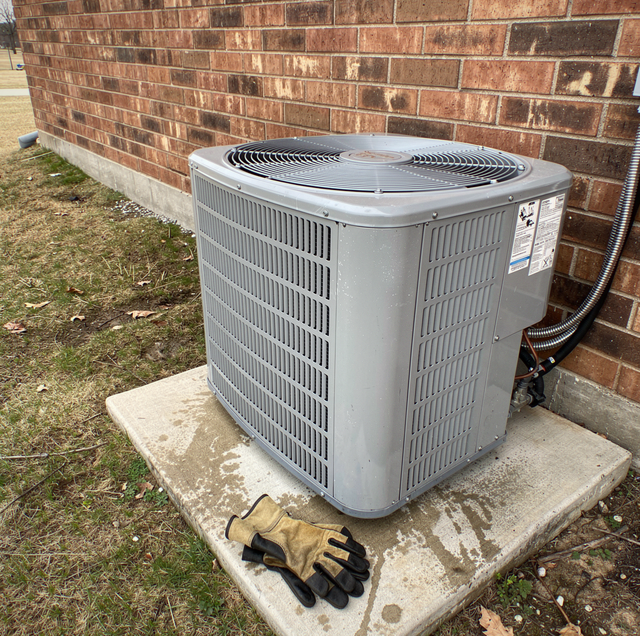
The outdoor unit hums, hesitates, then finally kicks on with a shudder you can feel through the wall. Or it doesn't kick on at all — just a click, a hum, and silence. Either way, the compressor is the part of your air conditioner most likely to leave you standing outside listening for a sign it's still willing to run. Deciding whether that unit is worth fixing or worth replacing outright is one of the harder calls a homeowner has to make, and it's rarely as simple as checking a birth date on the nameplate.
What the Compressor Actually Does
Inside the outdoor cabinet, the compressor is the pump that drives the entire cooling cycle. It draws in low-pressure refrigerant gas from the indoor coil, compresses it into high-pressure, high-temperature gas, and pushes it to the condenser coil, where the outdoor fan blows air across it to dissipate the heat. Once the refrigerant gives up its heat and condenses back into liquid, it flows back inside to absorb heat from the house all over again. Every stage of that cycle depends on the compressor running at the right pressure and the right speed. When it starts to fail, the whole loop suffers, not just the outdoor half of the system.
Because the compressor works under constant mechanical stress, sealed inside a canister and running for hours on end during peak cooling season, it tends to wear gradually before it fails outright. That gradual decline gives you a window to catch trouble early, if you know what to watch for.
Hard Starting Is Often the First Warning
A healthy compressor starts cleanly: a brief hum, then a steady run. A struggling one hesitates. You might hear a click as the start relay engages, followed by a loud hum that doesn't resolve into a run, or a delay of several seconds before the unit finally catches. This is called hard starting, and it usually means the compressor's internal windings or bearings are working harder than they should to get moving, often due to worn start components, low refrigerant pressure, or internal wear in the compressor. An occasional hard start might point to a failing capacitor rather than the compressor, but repeated hard starts put more strain on the motor windings each time, and that strain adds up toward full failure.
Clunking, Grinding, or Rattling Noises
Sound is one of the most reliable early warnings a compressor gives you. A steady hum is normal. A loud clunk at startup, a grinding or scraping noise while running, or a rattle that gets worse over the cooling season points to mechanical wear inside the compressor: worn bearings, a loose internal component, or valves that no longer seal properly. These noises rarely resolve on their own and tend to grow louder and more frequent as the damage progresses. Catching a grinding or knocking noise early and having it evaluated can be the difference between a repair that saves the unit and a compressor that seizes entirely.
Tripped Breakers on Startup or During Runtime
A compressor drawing too much current is a common cause of a breaker that trips repeatedly, especially on hot afternoons when the system runs longest and hardest. A compressor with worn windings, a failing start capacitor, or restricted refrigerant flow can pull higher amperage than it's rated for, and the breaker does exactly what it's designed to do: cut power before something overheats. An occasional trip during an unusually demanding stretch of weather isn't necessarily a compressor problem, but a breaker that trips repeatedly, especially right when the outdoor unit tries to start, is a strong signal that the compressor is straining against resistance it shouldn't have to fight.
Warm Air Even Though the System Runs
Few symptoms feel as confusing as an AC that runs constantly, blows air, and still doesn't cool the house. If the compressor has lost the ability to build proper pressure, whether from internal wear, a refrigerant leak feeding into a weakened compressor, or a valve that no longer seals, the refrigeration cycle can no longer move heat effectively. The blower keeps circulating air, so it feels like the system is working, but the air is only lukewarm rather than cold. This differs from a simple low-refrigerant issue: a system that's just low on charge usually still cools somewhat and often shows ice on the line set, while a compressor that has lost its ability to compress properly can leave you with weak, room-temperature airflow no matter how long it runs.
Age and Refrigerant Type Change the Math
A compressor problem on a two-year-old system reads very differently than the same problem on a system pushing past its expected service life. Compressors are engineered to last close to the lifespan of the whole outdoor unit, generally in the range of ten to fifteen years, so a compressor failure early in that window is often an isolated event worth fixing on an otherwise sound unit. A compressor failure late in that window, on a system that's already logged a decade or more of long, hot cooling seasons, is a different story: the rest of the unit, the coil, the fan motor, the electrical components, has absorbed the same years of wear, and a compressor swap on an aging cabinet often just delays the next failure rather than preventing it.
Refrigerant type adds another layer. Older systems designed around phased-out refrigerant are becoming harder to service as that refrigerant grows scarcer and parts for those compressors become harder to source. A compressor failure on one of those systems is often the moment when homeowners realize how constrained keeping the old unit running has become. Systems running current refrigerant don't have the same constraint, which is one more reason an identical compressor failure can point to repair on one unit and replacement on another.
A Framework for Deciding
Instead of treating every compressor failure the same way, run it through a short set of questions:
• How old is the unit relative to its expected service life? Early failure favors repair; failure near or past the expected end of service favors replacement.
• Is this an isolated failure, or has the system needed repeated repairs over the past couple of years? A first significant repair favors fixing it; a pattern of breakdowns favors starting fresh.
• What refrigerant does the system use, and how available are parts and service for it? Current, widely supported refrigerant favors repair; an aging, phased-out refrigerant tilts toward replacement.
• Is the failure contained to the compressor, or has it damaged other components, such as the electrical system, from overheating or high amp draw? Contained damage favors repair; cascading damage favors replacement.
• How has the rest of the system been performing? A unit that was cooling well and efficiently before the compressor failed is a better repair candidate than one that's already been running weak, noisy, or inefficient for other reasons.
Weigh those together rather than any single factor alone, and the right call usually becomes clear. A young, otherwise healthy system with a single compressor failure and available parts is worth saving. An aging system on outdated refrigerant, with a compressor failure layered on top of other wear, is generally better replaced than repaired piece by piece.
What Happens If You Wait
A struggling compressor rarely fixes itself, and ignoring the early warning signs tends to shorten the window in which repair is still an option. Hard starting that goes unaddressed puts more load on the motor windings with every cycle. A grinding noise left alone often ends in a seized compressor rather than a repairable one. A unit that keeps tripping the breaker risks damage to the electrical components around it, not just the compressor itself. Left unchecked long enough, what might have been a simple compressor swap can turn into a compressor that fails completely, taking the decision out of your hands and leaving replacement as the only remaining option.
Frequently Asked Questions
Most compressors are built to last close to the service life of the outdoor unit itself, commonly in the range of ten to fifteen years under normal use. Heavy runtime during long, hot cooling seasons can push wear faster than that average, while a system that's properly sized and well maintained tends to land at the higher end of the range.
It depends on what's actually wrong. Some compressor problems stem from failing support components, like a start capacitor or contactor, that can be replaced without touching the compressor itself. A compressor with internal mechanical damage, such as worn bearings or a burned-out winding, generally cannot be repaired piece by piece. In that case, the choice becomes replacing the compressor itself or replacing the whole outdoor unit.
Not always. Loose panels, debris caught in the fan, or a failing fan motor can all produce noise that sounds alarming but isn't related to the compressor. A grinding, knocking, or clunking noise that lines up with the unit's startup or running cycle, rather than a rattle that comes and goes with wind or debris, is the pattern most closely tied to compressor wear and worth having evaluated.
No. A breaker can trip because of a wiring issue, a failing capacitor, or an overloaded circuit shared with other appliances. A compressor problem becomes the likely cause when the breaker trips specifically as the outdoor unit attempts to start, or when it trips repeatedly during the hottest, longest-running stretches of the season.
Systems built around older, phased-out refrigerants face shrinking parts and refrigerant availability, which makes it harder to keep those systems running over time. A compressor failure is often the moment that constraint becomes obvious, since sourcing a matched replacement compressor or refilling an older refrigerant type gets harder each year. Systems using current refrigerant don't carry that same growing constraint.
Running a unit that's hard starting, tripping breakers, or making grinding noises risks turning a repairable problem into a total failure, since each cycle adds more strain to an already-struggling compressor. It's better to have the system evaluated and shut it down if advised to do so, rather than continue running it while you weigh the decision.
Get a straight answer about your outdoor unit before the compressor gets worse — an inspection will tell you whether repair or replacement is the smarter call. Fix My Air DFW serves Fort Worth and the DFW metro. TACLA33709C. Call (817) 439-9811.
