
Why Does Your AC Smell Musty When It First Turns On?
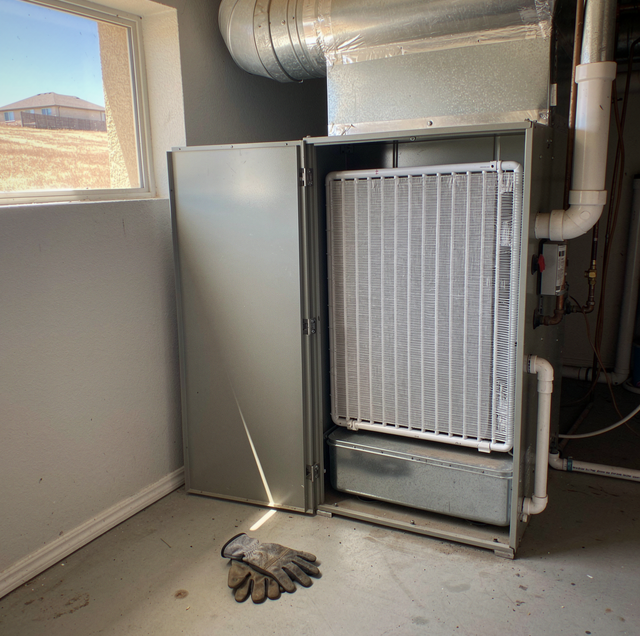
You walk in, bump the thermostat down, and for the first two or three minutes the air coming out of the vents smells like a basement that's been shut up for a season. Then it clears, the air runs clean, and by the time you've finished making coffee you'd swear nothing was ever wrong. That pattern, strong at startup and gone soon after, is common enough to have a fairly consistent explanation, and it almost always traces back to moisture sitting somewhere it shouldn't be between cycles.
Quick Answer: A musty startup smell that fades within a few minutes is usually mold or mildew growing on a damp evaporator coil or inside the condensate drain line during the hours the system sits idle. The first blast of air picks up that odor, then clears once fresh airflow dilutes it and the coil starts drying. A smell that lingers throughout the cycle, grows stronger over weeks, or appears with visible spots on the coil or vents is a different situation and warrants a professional look.
What Causes The Smell In The First Place
Your cooling system removes heat and moisture from the air by passing it over a cold evaporator coil. That coil sits inside the indoor air handler, tucked in a closet, attic, or basement depending on your home, and it stays wet almost the entire time the system is cooling. Moisture beads up on those fins the same way it does on a cold glass of water left out on a humid afternoon, and it drips down into a catch pan below before draining out through a small line, usually a PVC pipe running to the outside of the house.
That's a normal, working system. The trouble starts because a wet coil, a shallow pan holding standing water, and a length of dark, damp pipe are also close to ideal conditions for mold and mildew to take hold. Both organisms need moisture, a food source (the fine dust and organic debris that settle out of household air), and a lack of direct light, and an air handler checks every one of those boxes for hours at a stretch. Given weeks or months of that pattern repeating, a thin layer of biological growth on the coil fins, the inside of the drain line, or the catch pan is a fairly ordinary outcome rather than a sign of anything unusual happening in your home.
Why The Air Handler Is Prime Territory For Growth
Picture the inside of the air handler like a shower stall that never fully airs out. A bathroom shower gets wet, then the fan runs, the door opens, and it dries between uses. An evaporator coil gets wet every time the system cools, but during the off-cycle it often sits in a closed cabinet with limited air movement, so it dries slowly, if at all, before the next cycle wets it again. Over a long cooling season, that coil rarely gets a real chance to dry out completely.
The same logic applies to the drain line and pan. Water doesn't just pass through; a film is left behind on the plastic and metal surfaces every time condensate flows past. Add in the dust that filters through even a clean air filter and settles into that film, and you have a steady food supply sitting in a dark, humid tube for as long as the system has been in service. None of that requires anything unusual to have happened. It is simply what tends to build up in a wet, enclosed space over time unless something interrupts it.
Why The Smell Is Strongest Right At Startup
The reason the odor shows up hardest in the first few minutes, then fades, comes down to where the air is picking it up and how quickly that source gets diluted. During the off-cycle, air inside the closed cabinet sits still around the coil and the standing water in the pan. Whatever odor those surfaces are giving off has nowhere to go, so it settles into that pocket of trapped air.
The moment the blower kicks on, that first rush of air sweeps directly across the coil and through the cabinet before it ever reaches your vents, carrying the concentrated smell from the stagnant air pocket straight into your living space. Within a minute or two, though, the blower has moved past that first batch and is now continuously pulling in fresh return air, diluting whatever residual odor the coil and pan are still emitting. The smell doesn't disappear because the mold or mildew went away; it disappears because the concentrated whiff has already passed and the ongoing airflow is too diluted to notice. Run the system again after it sits idle for several hours, and the same pattern repeats.
Why Idle Periods Make It Worse
A system that runs often stays closer to a steady state: wet during cooling, slightly damp during a short off-cycle, wet again soon after. A system that sits unused for days or weeks, whether due to a stretch of mild weather, a vacation, or a shoulder season when cooling and heating rarely run, gives standing water and any existing growth far more time to sit undisturbed. Stagnant water in a pan or a low spot in the drain line has days instead of hours to develop a stronger smell, and the first cycle after that idle stretch tends to carry the strongest odor of the year.
This is also why the smell is often noticed right when a home switches from heating to cooling, or right after a system has been shut down for an extended trip. It isn't that something got worse during that time in a dramatic sense; it's that the usual cycle of wetting and partial drying paused, and stillness let the smell concentrate more than it would during a stretch of regular runtime.
The Condensate Drain Line's Role
The coil gets most of the attention, but the drain line and pan are just as often the actual source. A line that has picked up a coating of sludge over a few seasons narrows gradually, slowing the water's path out and letting more of it sit rather than flow. A pan holding even a shallow puddle because of a slow drain gives standing water days to sit between uses instead of minutes. Either one produces a smell that follows the same pattern as coil-based odor: concentrated in the still air of the cabinet, released in a burst at startup, then diluted as the system keeps running.
Telling the two apart from the outside isn't always simple, since both produce a similar earthy or damp-basement note. What often helps is checking the pan itself, when it's safely visible without touching the sealed coil or electrical compartment, for standing water or a slow drip after the system has been running.
When It's More Than A Passing Smell
A musty note that clears within the first few minutes of a cycle and doesn't come with anything else unusual is common enough that it rarely signals a health concern on its own. A few situations call for a different response, though. If the smell lasts the entire time the system runs rather than fading, if it's gotten noticeably stronger week over week, if you can see dark spots or fuzzy growth on the coil, vents, or around the air handler, or if anyone in the home has started reacting to it with congestion or respiratory irritation, that points past routine biological buildup and toward a bigger moisture problem that needs a real diagnosis rather than a filter swap.
Visible growth in particular isn't something to scrub at with household cleaners on your own, since a sealed coil and the electrical components around it aren't safe or effective to service without the cabinet opened correctly. A technician can inspect the coil, pan, and drain line directly, confirm how much growth is present and where, and clear or treat it with methods suited to an HVAC cabinet rather than a surface you'd wipe down in a bathroom.
What You Can Reasonably Do Yourself
A few habits reduce how often that startup smell shows up, without requiring you to open anything sealed. Swapping the air filter on a regular schedule reduces the dust supply that feeds growth on the coil and in the pan. Running the fan setting for ten or fifteen minutes after a cooling cycle ends helps air move across the coil and pan while they're still wet, encouraging some drying rather than letting that moisture sit. Keeping the area around the indoor unit clear of stored boxes or clutter also helps air circulate through the cabinet rather than trapping it.
If your system includes an accessible cleanout on the condensate line, some manufacturers design one specifically for a homeowner to pour a small amount of plain water through periodically to help flush loose debris, though this varies enough by equipment that checking your unit's manual before doing anything to the line is worth the few minutes it takes. Beyond that, a technician who flushes the line, checks the pan, and inspects the coil as part of a routine seasonal visit catches the buildup well before it turns into a lingering smell.
Frequently Asked Questions
A brief, fading odor at startup is typically a low-level biological smell rather than a toxic one, and most homes experience it at some point without lasting harm. Anyone with asthma, allergies, or a compromised immune system may notice more irritation from mold spores than others, though, and a smell that persists or grows stronger over time is worth having checked rather than living with indefinitely.
The evaporator coil only gets wet during cooling, since that's when it's pulling moisture out of the air. During heating, that coil generally stays dry, so the moisture-driven growth that produces the smell has far less reason to build up, and the odor most people notice tends to appear specifically at the start of the cooling season or after a cooling cycle rather than a heating one.
A fresh filter reduces the dust supply feeding growth on the coil and in the pan, which helps over time, but it doesn't remove buildup that has already formed. If the smell has been happening for more than a cycle or two, a filter change alone is unlikely to clear it completely; the coil, pan, and drain line usually need direct attention.
Both produce a similar damp, earthy note, making them hard to distinguish by smell alone. Checking whether the drain line is actively flowing when the system runs, and looking at the pan for any standing water, gives a better clue than trying to judge by scent, though a technician with access to the sealed coil can usually confirm the source directly.
Running the fan on a continuous setting keeps some air moving across the coil even between cooling cycles, which can help it dry out more between uses. It won't eliminate an existing buildup, and it does mean the blower runs more hours overall, so it's a preventive habit rather than a fix for a smell that's already established.
The evaporator coil sits next to live electrical components and refrigerant lines behind a panel that isn't designed for casual access, so pouring a cleaning solution onto it yourself risks damaging the fins or affecting parts you can't see. A technician has coil-safe cleaning products and the tools to access the coil correctly, which makes this one of the steps better left to a scheduled service visit.
Schedule a coil and condensate inspection — identify and clear the source of that musty startup smell before it becomes a bigger moisture problem. Fix My Air DFW serves Fort Worth and the DFW metro. TACLA33709C. Call (817) 439-9811.
