
How a Ductless Mini-Split Works: The 5-Part Breakdown
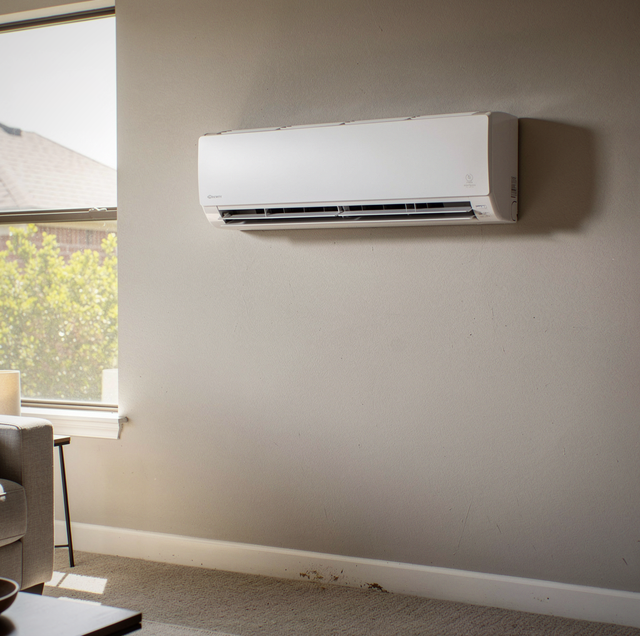
Quick Answer: A ductless mini-split is a heat pump split into two main pieces: an outdoor compressor unit and one or more indoor heads mounted on a wall, ceiling, or floor. A slim refrigerant line runs between them through a small hole in the wall. The system moves heat instead of ducting air, so it can both cool a room in warm weather and heat it in cold weather, one zone at a time.
What a Ductless Mini-Split Actually Is
A ductless mini-split is a heat pump that has been split into parts and stripped of its ductwork. Instead of one big furnace-and-coil box pushing conditioned air through a network of sheet-metal ducts, you get an outdoor unit and one or more indoor units that treat a single room directly.
The word "split" describes the layout. The compressor and the heat-exchange coil that normally live inside a central system get separated: the noisy, heat-rejecting half goes outside, and a compact indoor head handles the air in the room. The word "ductless" describes what is missing. There are no ducts, so there is nowhere for conditioned air to leak or lose temperature on the way to you.
That difference matters more than it sounds. In a typical central system, a large share of the heating or cooling can be lost to ducts that run through hot attics or leak at their seams. A mini-split skips that entire path. The air it conditions is produced right where you feel it.
The three pieces that make up the system: Before the benefits make sense, it helps to picture the hardware. Every mini-split is built from the same three parts:
• The outdoor unit: This holds the compressor, a coil, and a fan. It sits on a pad or a wall bracket outside and does the heavy lifting of moving heat.
• The indoor head: This is the unit you see in the room. It contains a coil, a quiet fan, and a filter, and it blows conditioned air directly into the space.
• The line set: A bundle of small copper refrigerant lines, a control wire, and a condensate drain runs between the two units through a wall penetration roughly three inches across.
Once those three parts are in place, the system is ready to move heat in either direction.
How the Heat Actually Moves
A mini-split does not create cold or make heat from scratch. It relocates heat from one place to another using refrigerant, a fluid that absorbs and releases heat as it changes between liquid and gas.
In cooling mode, the indoor coil gets cold. Refrigerant flowing through it absorbs heat from the room air as the fan blows across the coil. That warmed refrigerant travels through the line set to the outdoor unit, where the compressor pressurizes it, and the outdoor coil dumps the heat outside. The now-cooler refrigerant returns indoors and repeats the loop. The room loses heat; outside gains it.
Heating mode runs the same loop backward. A component called a reversing valve flips the direction, so the outdoor coil pulls heat out of the outdoor air, even when it feels cold outside, and the indoor coil releases that heat into the room. There is real, usable heat energy in cold air, and the refrigerant is what extracts it. This two-way ability is why a mini-split both cools in warm months and heats in cold ones from a single machine.
Why the inverter compressor matters: The part that separates a mini-split from an older on/off system is the inverter compressor. A conventional air conditioner runs at full blast until the room hits temperature, shuts off, then slams back on when the room drifts. That cycling wastes energy and lets temperature swing.
An inverter compressor instead ramps its speed up and down to match the exact load. On a mild afternoon it loafs along at low output; on a hot one it climbs. Running steadily at a lower speed uses less energy than repeated hard starts, holds the room within a tighter band, and pulls more moisture out of the air along the way.
Why People Choose Ductless
The appeal comes down to a handful of practical wins, most of them flowing from that missing ductwork.
• No duct losses: With no ducts to leak or radiate heat in an attic, more of the energy you pay for ends up in the room.
• Room-by-room control: Each indoor head has its own thermostat and setting, so you can cool a home office to one temperature and leave unused rooms alone. This is called zoning.
• Quiet operation. The loud compressor lives outside. Indoor heads run at a soft whisper because the fan is the only moving air.
• Easy to add where there are no ducts: A converted garage, a sunroom, an attic bedroom, or a new addition can get its own comfort without extending the main system's ductwork.
• High efficiency: The combination of no duct loss, inverter modulation, and heat-pump operation makes these systems among the more efficient ways to condition a space.
Single-Zone Versus Multi-Zone
Mini-splits come in two broad arrangements, and the difference is simply how many rooms one outdoor unit serves.
A single-zone system pairs one outdoor unit with one indoor head. It is the common choice for a single problem room: a hot bonus room, a chilly home office, a garage gym.
A multi-zone system connects several indoor heads to one larger outdoor unit. Each head still has its own controls and runs independently, but they share the compressor outside. Multi-zone suits a whole small home or a cluster of rooms where running one outdoor unit is tidier than lining up several.
The indoor head styles: The visible indoor unit comes in a few shapes so it can fit different rooms:
• Wall-mounted: The familiar rectangular unit high on a wall. It is the most common and least expensive style.
• Ceiling cassette: A square unit recessed into the ceiling that blows air out of several sides, nearly flush and out of sight.
• Floor-mounted: A low console that sits near the floor, useful where wall and ceiling space is limited or a low-mount airflow is preferred.
What Installing One Involves
A mini-split needs three connections, and the modest scope is part of the appeal. It needs a small wall penetration, roughly three inches, for the line set to pass through. It needs a condensate drain, because pulling humidity out of the air produces water that has to run to a safe drain point. And it needs a dedicated electrical circuit run to the outdoor unit.
The refrigerant lines and the electrical hookup are licensed work, not a weekend project. Charging a refrigerant circuit requires EPA certification, and the system has to be evacuated and charged correctly to run right, so refrigerant is never a DIY top-off.
Keeping It Running
Most heads use washable mesh filters that pop out. Rinse them every few weeks and let them dry fully before reinstalling, since clogged filters are the leading cause of weak airflow and higher energy use.
Outside, keep the outdoor unit clear. Trim back plants, clear leaves and grass clippings from the coil fins, and make sure the unit sits level on its pad so condensate and refrigerant behave as designed. Anything past filter cleaning and clearing debris, such as checking refrigerant charge, cleaning the deep coil, or clearing a plugged condensate line, is a technician job. Refrigerant is never a DIY top-off.
When a Mini-Split Fits, and When Central Air Wins
A mini-split shines when you need to condition a space that has no ductwork, or when you want independent control of one or a few rooms. Additions, garages, sunrooms, converted attics, and homes heated by boilers or baseboards that never had ducts are natural fits. So is a home where one or two rooms are always the wrong temperature.
Central air still has its place. A home that already has sound ductwork and wants one thermostat for the whole house, or a large home with many rooms, may be served more simply by a central system. Ducts also handle whole-home air filtration and fresh-air ventilation more easily than a bank of separate heads. The better fit comes down to the building, not on which technology is newer. A load calculation for your space settles it.
Frequently Asked Questions
Standard heat pumps lose capacity as outdoor temperatures drop, but cold-climate mini-split models are built with enhanced-injection compressors that keep meaningful heat output down toward roughly minus 13 degrees Fahrenheit. If reliable deep-cold heating matters for your space, ask specifically for a cold-climate or hyper-heat rated model rather than a standard one, because the two are not interchangeable.
Most residential mini-splits allow a line-set run of about 25 to 50 feet between the outdoor unit and an indoor head, and many allow a vertical rise of around 30 to 50 feet, with the exact limit set by the model. Longer runs may need extra refrigerant added by the installer to compensate, which is one more reason the charge is a licensed task rather than a fixed factory amount.
The indoor head pulls humidity out of the air, and that moisture collects in a small pan and drains away through a condensate line, usually by gravity to the outside near the line-set exit. In basements or spots below the drain point, installers add a small condensate pump to lift the water. A musty smell or water dripping from the head is the classic sign the condensate line is clogged and needs clearing.
A single multi-zone outdoor unit can typically support about four to eight indoor heads, depending on its capacity, but every head that is running draws from the same compressor. If you connect more heads than the outdoor unit is rated to handle at once, or run them all on a design-load day, some rooms will underperform. Matching total indoor capacity to the outdoor unit is part of proper sizing.
Most mini-splits use their own handheld remote and an onboard control board rather than the low-voltage wiring a wall thermostat uses, so a standard smart thermostat will not control one directly. Many models offer a manufacturer Wi-Fi module or app for scheduling and remote control, and third-party adapters exist to bridge a head to a smart-home system if that integration matters to you.
A well-maintained mini-split commonly runs 15 to 20 years, which is comparable to or a bit longer than a typical central system. The biggest factors in reaching the high end are keeping the filters clean, keeping the outdoor coil clear, and having it correctly sized and charged at install, since an overworked or improperly charged unit ages its compressor faster.
Wondering if a mini-split fits your space? Book a sizing visit and get the honest answer before you buy. Fix My Air serves Fort Worth and the DFW metro. TACLA33709C. Call (817) 439-9811.
