
AC Blower Runs but No Air From Vents: 6 Culprits
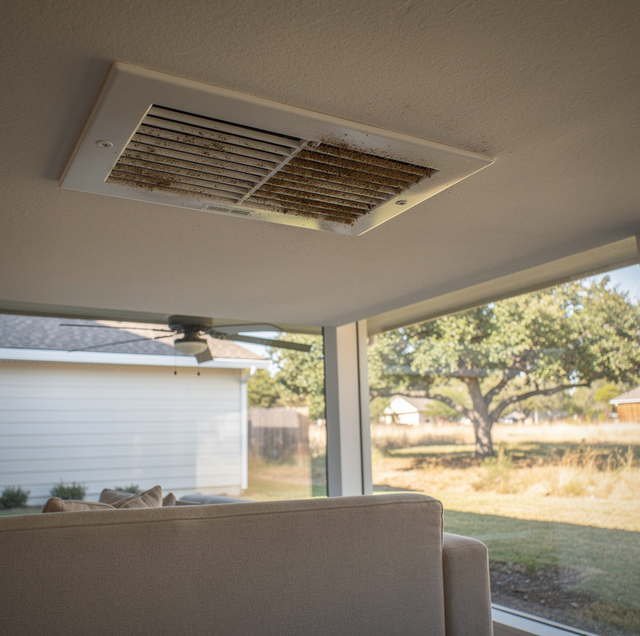
You stand under a supply register with your hand up, and you can hear the indoor unit running in the closet or attic, but almost nothing lands on your palm. The fan is clearly spinning, so the problem is not that the system is dead. Something is blocking or losing the air somewhere between the blower and the register grille. Sorting out where that loss happens is what turns a frustrating guess into a real fix.
Quick Answer: If the blower runs but little or no air reaches the vents, air is being blocked or lost on its way out: a clogged filter, an iced-over evaporator coil, a disconnected or crushed duct, a closed damper, or a blower wheel that is caked with dirt or spinning too slow. Check the filter and look for a frozen coil first; the rest calls for a technician.
How Air Actually Moves Through Your System
Before touching anything, it helps to picture the whole path the air travels, because the symptom you are seeing depends entirely on where the path is pinched.
Air is pulled in through the return grille, the large intake vent usually on a wall or ceiling. It passes through the filter, then reaches the blower, the motorized fan wheel that does the pushing. From the blower, the air is driven across the evaporator coil, the cold finned surface that removes heat and moisture. From there it enters the supply plenum and travels out through the branch ducts to each register in your rooms.
A garden hose makes the relationship easy to see. Turn the spigot on full, and the water still trickles out if there is a kink in the line or a thumb over the nozzle. The pump at the source is working; the delivery is choked. Your blower is that spigot, and any pinch downstream of it starves the registers no matter how hard the fan spins.
Once you hold that path in mind, every cause below is just a question of which segment is blocked: intake, coil, blower, or the ducts past it.
The Causes You Can Check Yourself
A few of the common culprits are safe for a homeowner to inspect. None of these require opening a sealed electrical compartment or touching refrigerant.
A Filter That Has Turned Into a Wall: The filter is the first restriction in the path, and a neglected one is the single most common reason airflow collapses. When the filter loads up with dust, pet hair, and lint, it stops behaving like a screen and starts behaving like a solid panel. The blower still runs, but it can no longer pull enough air through the clog to deliver a normal stream at the registers.
Pull the filter and hold it up to a light. If you cannot see brightness through it, it is choking the system, so slide in a clean one of the same size and airflow rating and see whether the vents recover.
A Frozen Evaporator Coil: If the coil has iced over, that sheet of frost becomes a plug the air cannot get through. You may notice the air that does escape feels cold but faint, or you find frost and water around the indoor unit. Freezing is more common during cooling because the coil runs cold then, but a blocked or dirty coil can ice up in any season the system is calling for cooling.
The homeowner-safe response is to switch the system to off, or to fan-only if you have that setting, and let the ice melt fully before running cooling again. Put down towels for the meltwater. If the coil freezes again after thawing, stop running it in cool mode and call a technician; recurring freezing points to low refrigerant or an airflow restriction that will not fix itself.
Closed or Blocked Registers and Dampers: Air also disappears when its exit is shut. A register lever that got nudged closed, a couch pushed against a floor vent, or a rug draped over one will kill the flow to that room while the rest of the house feels normal. Some homes also have manual damper handles on the ductwork in the attic or basement; a handle turned crosswise to the duct closes that branch.
Walk the house and confirm every register is open and unobstructed. If one whole zone is dead while others blow fine, a damper for that branch may be closed.
The Causes That Call for a Technician
When the filter is clean, nothing is frozen, and every register is open, the loss is deeper in the system. These involve parts that hold an electrical charge or move air behind sealed panels, so they require diagnosis and repair by a licensed tech, not a homeowner project.
A Disconnected or Crushed Duct: Flexible ducts in the attic ride on straps and slip over metal collars held by clamps and tape. Over years, the tape dries, the clamp loosens, and a duct can pull off its collar entirely. When that happens, the blower dumps its air straight into the attic instead of into your rooms, and the registers on that run go nearly silent. A duct that got stepped on, kinked around a rafter, or crushed under stored boxes does the same thing by pinching the passage closed.
A technician traces the branch back from the dead register and inspects the connections and the run for separations, crushed sections, and torn liner, then reconnects and seals what has failed.
A Blower Wheel That Spins but Cannot Move Air: The blower wheel is a drum ringed with small curved blades that scoop air forward. Those blades slowly cake with a felt of dust. A wheel packed with grime has lost the blade shape that grabs air, so the motor turns at full speed while moving a fraction of the air it should. In belt-driven older units, a loose or glazed belt lets the wheel slip so it turns slower than the motor. Either way, you hear the machine running and feel almost nothing at the vents.
A tech pulls and cleans the wheel or corrects the belt so the blades bite the air again.
A Weak Motor, a Failing Capacitor, or the Wrong Speed Tap: The blower motor relies on a run capacitor to reach and hold full speed. A failing capacitor lets the motor limp along, spinning but weak, so airflow drops even though the fan is turning. A motor with worn bearings drags for the same reason. Separately, many blowers have multiple speed settings, and if the wiring is landed on a low-speed tap meant for heating, the fan will move too little air in cooling. All of this lives inside the electrical compartment, which holds a stored charge even with the power off, so it is strictly pro-only.
The blower motor, its run capacitor, and the electrical compartment hold a stored charge even with the breaker off, and refrigerant work is regulated. Leave those parts to a licensed technician, not a homeowner project.
How a Technician Pins Down the Cause
Rather than swapping parts on a hunch, a good tech measures. Static pressure readings, taken with a manometer at points in the airflow path, reveal where resistance spikes: a high reading across the filter or coil confirms a blockage there, while an abnormal reading tells them the ducts are the choke point. A temperature split, the difference between the return air and the supply air, shows whether the coil is doing its job or is starved and freezing. They inspect the coil face for ice and grime, open the blower compartment to check the wheel, and walk the ducts for separations. The measurements point to the segment at fault before anything gets replaced.
No Air at All Versus Weak Air
The distinction matters for what you are chasing. If a single register is dead while the rest of the house blows normally, look at that room first: a closed register, a closed damper, or a disconnected duct on that one branch. If every register in the house has gone weak at once, the trouble sits at a shared choke point that all the air passes through, which means the filter, the coil, or the blower itself. Naming which pattern you have narrows the search before a technician even arrives.
A quick safety note: filter changes and letting a frozen coil thaw with the system off are fine to do yourself. Refrigerant, the blower motor and its capacitor, and the electrical compartment are not; that compartment holds a charge even when the breaker is off. Leave those to a licensed technician.
Frequently Asked Questions
With the system switched to off, a lightly iced coil usually clears in about one to three hours, but a coil frozen into a solid block can take the better part of a day. Setting the system to fan-only, if your thermostat offers it, blows room-temperature air across the ice and speeds melting considerably. Do not chip or scrape the ice; the coil fins and the copper tubing bend and puncture easily, and a punctured coil leaks refrigerant.
Yes. A filter with a very high efficiency rating packs its media tightly, and on a blower not sized for that resistance, a brand-new filter can starve airflow the same way a dirty one does. Deep pleated filters four or five inches thick generally flow better than a thin one-inch filter at the same efficiency because they spread the air over far more surface area. Match the filter to what the system was designed to pull rather than reaching for the finest one on the shelf.
The registers at the end of the longest duct runs get whatever pressure survives the trip, so they are the first to fade when total airflow drops. Long flexible runs with sharp bends add resistance that shortchanges the far rooms, and a partially collapsed section on that branch can cut it off almost entirely. Balancing dampers exist to even this out, and a tech can adjust them so the near rooms stop hogging the air.
It can explain intermittent airflow. On the "auto" setting, the blower runs only while the system is actively heating or cooling, so between cycles the vents go still, which is normal. Switching the fan to "on" runs the blower continuously for steady air movement and better filtration, at the cost of a little more electricity. If air stops the instant a cooling cycle ends, that is the auto setting behaving correctly, not a failure.
Indirectly, yes. A condenser coil buried in cottonwood, grass clippings, or dryer lint cannot shed heat, which drives up system pressures and can push the indoor coil toward freezing, and a frozen indoor coil is what blocks your vents. Rinsing the outdoor coil gently with a garden hose from the inside out, with the power off at the disconnect, keeps it breathing. Never use a pressure washer; it folds the delicate aluminum fins flat.
If airflow has nearly stopped, run it as little as possible. A blower fighting a heavy blockage overheats its motor windings, and a system iced over and still called to cool can slug liquid refrigerant back to the compressor, which is the most expensive part to replace. Shut it off, let any ice thaw completely, and leave it off until it is looked at. Short test runs to check whether a fix worked are fine; hours of running against a blockage are not.
Book a same-day airflow diagnosis — get real air moving through your vents again. Fix My Air DFW serves Fort Worth and the DFW metro. TACLA33709C. Call (817) 439-9811.
