
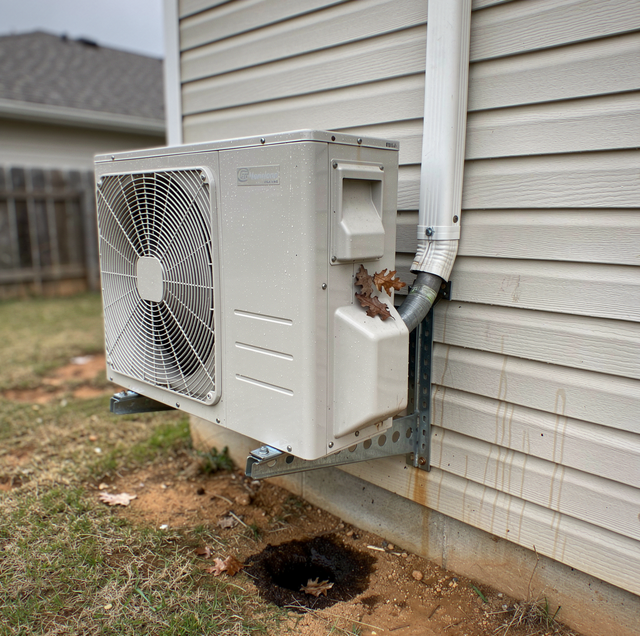
Frost builds up on a heat pump's outdoor coil during cold-weather heating, and the system periodically reverses to melt the frost before switching back to heating the house. That switch is a complete change in the direction of refrigerant flow through the system, so it comes with its own set of sounds layered on top of whatever the unit already makes while heating. The sounds that belong to that switch are distinct from those that signal a part is wearing out or failing.
What follows pairs each sound heard during a defrost switch with whether it fits the normal sequence and what it signals when it does not:
| Sound | Fits the defrost sequence? | Source |
|---|---|---|
| A whoosh or hiss as defrost starts and ends | Yes | The reversing valve redirecting refrigerant flow |
| The outdoor fan stopping, then restarting with a rush of air | Yes | The fan cycling off so the coil can warm undisturbed |
| Crackling paired with a cloud of steam | Yes | Meltwater evaporating off the warm coil |
| A clunk at the switch loud enough to be new, or to shake the cabinet | Not on its own | A reversing valve sticking before it seats, a worn compressor mount, or a loose panel |
| Grinding or scraping from the fan | No | Ice reaching the fan blade, or a fan motor wearing out |
| A rattle or buzz that continues after defrost ends | No | Loose hardware or a part not seated correctly |
| A squeal that continues after the switch | No | A fan motor bearing losing its lubrication |
The Switch-Over Whoosh
The whoosh or hiss at the start and end of a defrost cycle comes from the reversing valve switching the refrigerant to a different path, which briefly changes the pressure in the lines. That valve is the same part that lets a heat pump switch between heating and cooling, and the pressure change it causes each time is expected, not a sign of trouble on its own. Two units of the same age can sound different at that moment, and that alone does not separate a working valve from a failing one. Whether the sound is brief and lands right at the start or end of the switch, or drags on and repeats through the cycle, is the distinction that matters; the first fits the mechanism, the second belongs with the sounds below.
The Fan Pause and the Steam
When defrost begins, the outdoor fan stops turning while the coil switches to giving off heat instead of collecting it. Airflow across a warming coil would carry that heat away before it can melt the frost, so the fan sits still until the coil has done its job, then restarts with a burst of air once normal airflow resumes. Steam rising off the unit during this stage is meltwater evaporating off the warmed coil. A burning smell or a dark, oily haze is not part of defrost; that is the cue to shut the unit down at the thermostat and the breaker, then call for repair.
Note the time of each loud sound and whether the outdoor fan is still or turning at that moment to tell a technician whether the sound is from the defrost switch or the fan, before any panel comes off.
Bangs and Clunks From a Sticking Valve or a Loose Part
A loud clunk or bang timed exactly with the switch, rather than spread through the cycle, can come from the reversing valve sticking partway before it seats into its new position, then snapping the rest of the way with force instead of moving smoothly. The valve is a mechanical slide inside a sealed body, and a slide that has lost lubrication or picked up debris can stick rather than glide. A bang can also come from something looser: a cabinet access panel with a screw backed out, or an internal bracket that has shaken free, knocking against the housing each time the unit shifts with the switch. Either source calls for a technician to open the cabinet and look, with the power confirmed off first. The two sources sound close enough that guessing from outside the cabinet is unreliable, and telling them apart is part of a repair visit.
Grinding and Scraping From Ice or the Fan Motor
Grinding or scraping that lines up with the fan's turning can come from ice, the fan motor, or a blade or guard knocked out of alignment. Ice that built up heavily enough to reach the fan blade or its guard drags and scrapes with every rotation, a sound that eases once the ice clears during defrost and can return the next time icing reaches the blade. The fan motor itself is a second source: bearings that have lost lubrication or worn down produce a grinding sound whether or not any ice is present, and unlike ice-related grinding, that sound does not clear on its own once defrost ends. A blade or its guard bent or knocked out of true is a third source, scraping the housing on every rotation regardless of ice or defrost timing. Anyone looking closely at the unit switches it off at the outdoor disconnect or the breaker first.
An outdoor fan can restart without warning the moment a defrost ends, and ice wedged against the blade can throw fragments when it does. A technician frees the ice with power confirmed off at the outdoor disconnect and the blade at rest.
When Defrost Runs Long or Repeats
A defrost cycle that seems to stretch out, or one that starts again soon after finishing, matters to the noise because it changes how much of the noisy stage the unit passes through. An incorrect defrost sensor reading is one possible reason a cycle runs longer than the ice needs; a defrost control board that has begun to fail is another, starting cycles the coil does not need or ending them before the ice clears. Icing heavy enough that defrost cannot keep up with it is a separate problem from a noisy-but-working cycle, and calls for its own diagnosis rather than a repair aimed only at the sound.
What a Heat Pump Repair Visit Checks
A technician diagnosing a noisy defrost cycle checks more than the sound itself. That means confirming the reversing valve moves fully and seats cleanly, checking the defrost sensor and control board against the coil's measured temperature, and testing the fan motor's amp draw and bearing play rather than judging it by ear alone. Mounting hardware, access panels, and any bracket that could be loose get checked too, since a bang or rattle can turn out to be something loose rather than a failing part. The electrical connections feeding the defrost control board are part of that same check, since a loose or corroded connection can cause the board to behave erratically without the board itself being at fault.
Frequently Asked Questions
On some units, yes: the valve's solenoid coil energizes with an audible click a moment before refrigerant flow reverses, a separate, sharper sound from the whoosh that follows once flow changes direction. The click comes from the small pilot valve the solenoid moves; the whoosh that follows is the main slide shifting the refrigerant.
On some units, a time-delay relay holds the fan off for a short stretch after the coil finishes shedding its frost, rather than restarting the instant defrost ends. On units built with it, the delay lets meltwater run off the coil before airflow resumes, so the fan does not blow that water back through the fins. A fan that restarts immediately on a unit designed with this delay is worth mentioning at a repair visit, separate from any noise question.
It can. The compressor sits on rubber isolation feet designed to absorb its vibration, and if one foot cracks or shifts out of place, the compressor can rock slightly each time it starts or stops, striking the inside of the cabinet. That bang lines up with the compressor cycling on or off rather than with the moment the reversing valve switches, which is one detail a technician uses to tell the two apart.
It can be a contributing factor. A system running short on refrigerant carries less heat through the outdoor coil, which lets the coil run colder than it should and encourages heavier frost to build before the next defrost. A heavier frost load takes a longer cycle to clear. Refrigerant charge is diagnosed with gauges and adjusted only by a licensed technician, never something to check or top off without that equipment.
It is a small temperature sensor clipped to a tube on the outdoor coil, on some units near the bottom, where frost is the last to clear. A clip that has slipped off its tube reads the air instead of the coil, and the control then misjudges when the coil is clear, ending defrost with ice still on the coil or running it past the point the ice is gone, and a longer or repeated cycle means more of the noisy stage.
Yes. The refrigerant lines between the outdoor unit and the indoor coil carry the pressure change of each reversal, and where a line touches a stud, a joist, or the siding where it passes through, the whoosh or clunk can be heard indoors. A line strapped or sleeved off the framing quiets that path.
Reserve heat pump repair for a defrost cycle that keeps banging or grinding — reversing valve, defrost sensor and control, and outdoor fan motor diagnosis. Fix My Air DFW serves Fort Worth and the DFW metro. TACLA33709C. Call (817) 439-9811.