
Your Plenum’s Cracked or Disconnected? Vents Go Weak
You put a hand under the register in the back bedroom, and the air on your palm is thin. The hallway register does the same. So does the one over the couch.
So what is choking it? That question sends the search to the filter, the coil, and the blower wheel, because those three sit in the shared path every cubic foot of air has to cross. When all three come back clean, the question has to change.
A cracked or disconnected plenum causes cooling problems the moment the box stops holding air, because your air handler loses part of its airflow before any branch duct in your house gets a share. Your equipment reads the way it should. Your rooms do not.
An Air Handler Feeds One Box Before Any Room
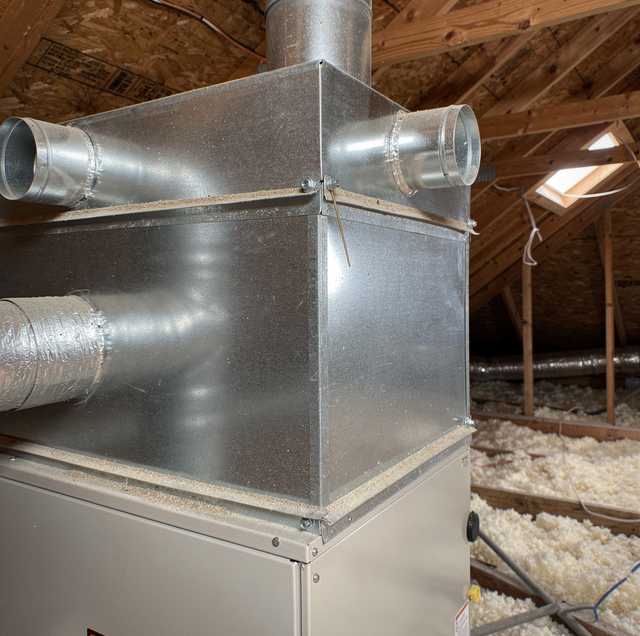
The plenum is the sheet metal or duct board box bolted to the air handler where every branch duct begins. In a supply system, it takes everything the blower pushes across the coil and holds it at a single pressure until the takeoffs pull from it. The return plenum does the same job in reverse on the intake side, gathering the air your house gives back at the cabinet where your filter drops in.
That position is what separates it from a duct. A branch that pulls off its collar takes one register down and leaves the rest of your house normal, which is why a dead vent sends a technician up the run that feeds it. A plenum sits above all of them. Whatever escapes there is gone before the system has even divided the air among your rooms.
On many residential air handlers, half-inch screws connect the duct to the cabinet, and pilot holes go only through the field duct and the unit flange, not through both.
Shared Restriction and Shared Loss Leave Opposite Evidence
Every register in the house going weak at once is one symptom with two different sources. The air can be squeezed as it passes through, or it can be spent before it starts.
A restriction is a narrowing in the shared path. A filter loaded to a mat, an evaporator coil furred with dirt, a blower wheel packed with felt: each one makes the blower work against more resistance than it was built for, and the amount of air the fan can move falls. The whole house goes short because the fan itself is losing ground.
A plenum breach works the other way around, and this is where the two part company. A hole downstream of the coil reduces the resistance rather than adding it, so the blower does not slow down at all. It moves its rated air, sometimes a little more, and a share of that air walks out of the box into the attic or the closet before a single takeoff in your house has had a chance at it. Picture a pitcher poured into a funnel that has split at its widest point. The pitcher empties as fast as it always did and the glass underneath fills slowly, because the split is upstream of everything the funnel was built to feed. What your house is short of is a shared loss, not a shared restriction, and the two leave opposite evidence at the equipment.
A technician's next move turns on which of the two it is. One case points at the shared path through the equipment. The other points at the box it ends in.
Open Seams and Failing Support Are Different Problems
A plenum comes apart in two ways, and the two call for different repairs. The first is a seam. A sheet metal box is folded and fastened at its corners; a duct board box is cut, taped, and stapled at its shiplap joints. Both have long lines that can open. Outward-clinch staples go at about two-inch intervals on duct board joints before closure tape, or mastic goes on.
The second starts outside the ductwork altogether. An air handler in an attic is carried on a platform or hung from the framing, and in many installations, angle steel support brackets with a minimum three-eighths-inch threaded rod support the unit from below. Let that platform settle, or let a hanger sag, and the cabinet moves while the plenum stays where the branch ducts hold it. The joint between them opens.
Which one you have changes what gets fixed, and in what order. Tape and mastic will close a seam that opened on its own, and your system will hold. Put the same tape on a joint that opened because the unit settled, and the weight that pulled it apart is still pulling. Your technician should look at the platform and the hangers first, before anything is sealed.
Why Does the Equipment Read Normal While Rooms Stay Warm?
Because nothing the equipment is watching has changed. Your blower turns at the speed it was set to. The coil gets all the air it needs and more, so it does not run cold enough to frost, and the refrigerant side behaves. The cabinet itself is built to less than 1.4 percent airflow leakage when tested at half an inch of water column to a national testing standard, with the shipped gaskets intact. A field-built box screwed to that cabinet carries no such number, and a gap in it is invisible to every part the machine can sense.
What your house shows is quieter and easier to misread. Every register runs the same thin stream, and no room stands out, because nothing has been taken from one branch in particular. The system runs and runs without closing the last few degrees. And the space around the cabinet gets warm for a reason specific to this failure. The supply is emptying into that closet or that attic every minute the blower runs, so the warmth arrives at the cabinet itself, strongest within arm's reach of the joint.
The amounts involved are real. Federal building-science research reports measured air handler cabinet leakage of up to 60 cubic feet per minute, which it gives as about 5 percent of total airflow, and notes that pressures in the supply and return plenum at the air handler commonly reach or exceed half an inch of water column. That is a live pressure standing against every open seam, all day long, in an attic hotter than anything your system is trying to condition.
The Gap Shows Itself With the Blower Running
A technician confirms this at the cabinet with the system on. The joint between the plenum and the flange is worked by hand along its entire length, and a puff of smoke held at a suspect seam leans out hard where a supply box is losing air and is drawn in where a return box is gaining it. On a duct board plenum, the closure tape and the staple line get read directly.
The repair follows what is found, with mastic, mastic and embedded fiberglass mesh, or a listed foil duct tape at the seams and joints, and gaps wider than three-eighths of an inch going to mastic and mesh instead of tape alone. Treat a shared loss as a shared restriction, and the work still gets done on the wrong parts. Your filter comes out, your coil gets washed, and every register in your house is still weak, with the gap at the cabinet open for every hour the blower runs.
Frequently Asked Questions
A plenum is built on site, and its joints are only as good as the day they were made. Staples that missed, tape on a dusty facing, or thin mastic hold through a mild first season and let go once your system runs long cycles. If your registers faded in the first hot stretch, the box earns your technician's look.
The closure system changes. Duct board is rated for operating pressure between minus two and two inches of water column, which your system sits comfortably inside, so the board itself holds and the closure ages. If your box is duct board, your technician reads tape seams and staple lines. On metal, it is your corners and screws.
A seam that opened on a sound box gets sealed in place and holds. A rebuild comes up when duct board facing has been wet and tears at a touch, when the corners were cut short so the shiplap never closed, or when the box was undersized. Your technician then reads the condition of your box before choosing a repair.
Fix what moved. If your unit settled, your platform or your hangers get corrected, so the joint stops carrying weight it was never meant to hold. If your box is duct board, ask that the staple line be restored under any new tape, since staples hold and tape only seals. Then have your technician look again after a full season.
There is no urgency for anyone's safety where the cabinet sits in a closet or an attic with nothing burning in it. A return plenum opening into an attached garage or a room with a fuel-burning appliance is the exception, and that one gets shut off and inspected the same day. Otherwise you are losing the equipment's work.
The same defect causes the opposite complaint. Your return plenum sits below the pressure in your house, so a gap there takes air in where a supply gap sends it out. What reaches your coil is room air blended with whatever surrounds the cabinet. So a single defect on two sides of one blower produces two complaints that do not look alike.
No handheld under a register can tell you whether the air is being throttled on its way through or spent before it starts — a technician opening the cabinet can settle that in one visit. Fix My Air DFW serves Fort Worth and the DFW metro. TACLA33709C. Call (817) 439-9811.
