
Heat Pump vs Gas Furnace: Which Wins in a Sudden DFW Freeze?
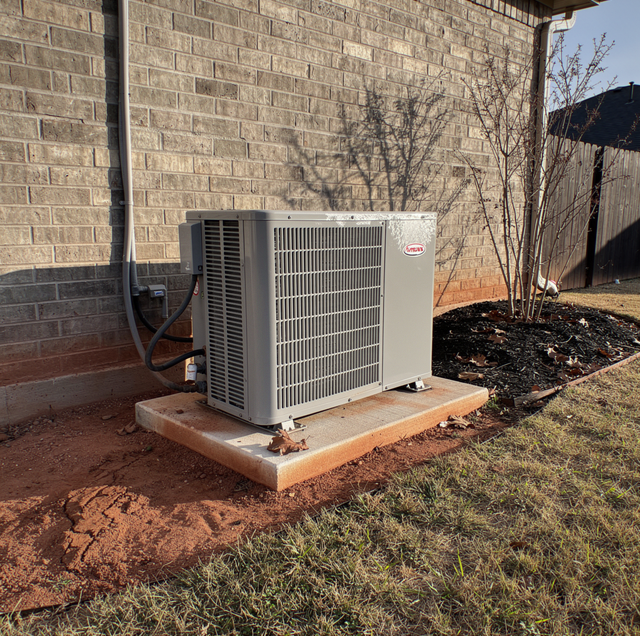
Quick Answer: A heat pump heats efficiently and cheaply most of the year by moving heat from outside air, but its output drops as the temperature falls below its "balance point" — often somewhere around 30 to 40°F — where it leans on costly backup heat. A gas furnace makes its own heat by burning fuel, so a hard freeze doesn't faze it. In a climate that's mild most of the time but throws the occasional sudden freeze, like North Texas, a dual-fuel system that pairs a heat pump with a gas furnace often heats best of all.
North Texas weather is exactly the kind that makes this a real question. Most of the winter is mild enough that an efficient heat pump is the obvious choice — and then an arctic front drops in and the temperature falls 40 degrees in a day. The two systems handle that swing very differently, and the best answer for a climate like this often isn't either one.
How the Two Make Heat
A gas furnace makes heat by burning natural gas in a combustion chamber and blowing air across a hot heat exchanger. It generates its own heat, so its output doesn't depend on how cold it is outside — 20°F or 50°F, it produces the same blast of warm air. That's its defining strength.
A heat pump doesn't make heat; it moves it. Using refrigerant, it pulls heat from the outdoor air and carries it inside, even when the air feels cold. Because it's moving heat instead of creating it, a heat pump is remarkably efficient — in mild weather, it delivers roughly 2 to 3 units of heat for every unit of electricity it uses, which is why it costs much less to run than resistance heat. The catch is that the colder the air gets, the less heat there is to pull from it.
The Balance Point — Where a Heat Pump Starts to Struggle
Every heat pump has a balance point: the outdoor temperature at which it can no longer pull enough heat from the air to keep up with your home's heat loss. For a standard heat pump, that point usually falls somewhere between 30 and 40°F, depending on the unit and how well your house holds heat. Above it, the heat pump handles everything easily and cheaply. Below it, it can't keep up on its own.
When that happens, the system switches on auxiliary heat — electric resistance strips inside the air handler, essentially big toasters in your ductwork. They work, but they're expensive: where the heat pump delivers roughly two and a half to three units of heat for every unit of electricity it uses, the strips deliver only one. During a multi-day freeze, hours of strip heat can add a painful amount to a single month's bill. Modern cold-climate heat pumps push the balance point much lower and stay efficient far colder than older models, but the basic physics still applies.
The Head-to-Head
| Factor | Heat Pump | Gas Furnace |
|---|---|---|
| How it heats | Moves heat from outdoor air | Burns gas to make heat |
| Efficiency in mild weather | Very high (2–3x electric) | Good, but costs more to run |
| Performance in a hard freeze | Drops; leans on costly backup heat | Strong and steady regardless of cold |
| Also provides cooling | Yes — it's your AC too | No — needs a separate AC |
| Fuel | Electricity | Natural gas |
| Best climate | Mild winters, few hard freezes | Cold winters, frequent deep freezes |
One point that matters for budgeting: a heat pump is also your air conditioner, so a single system covers both seasons. A gas furnace only heats, so it's always paired with a separate AC.
Which Fits a Climate Like North Texas
Here's the honest read for a place that's mild most of the winter but gets sudden, sharp freezes. A heat pump alone will be cheaper to run for the large majority of the season, but it will struggle and burn expensive strip heat during the worst cold snaps — exactly when you need heat the most. A gas furnace alone will sail through every freeze without blinking, but it costs more to run on the many mild days when a heat pump would have been far more efficient, and you still need a separate AC.
That's why a dual-fuel (or "hybrid") system is so well-suited to this climate. It pairs a heat pump with a gas furnace and switches automatically: the heat pump handles the mild majority of the winter efficiently, and when the temperature drops past the balance point, the gas furnace takes over and carries the load through the freeze — skipping the expensive electric strips entirely. You get the heat pump's everyday efficiency and the furnace's freeze-proof muscle, which is the combination this weather rewards.
If a dual-fuel setup isn't in the budget, the choice comes down to your priorities: lowest day-to-day running cost across a mild winter points to a heat pump (ideally a cold-climate model), while worry-free heat through every hard freeze points to a gas furnace. Sizing and a proper switchover setting are where the system either nails this balance or wastes money, so it's worth getting right.
Frequently Asked Questions
Yes, but its output and efficiency drop as it gets colder. A heat pump pulls heat from outdoor air, and there's less of it to pull as temperatures fall, so below its balance point — often around 30 to 40°F — it can't keep up on its own and switches to backup heat. Cold-climate models perform far better in freezing conditions, remaining efficient at much lower temperatures than older units.
Usually, because it's running a defrost cycle. The system briefly reverses to melt ice off the outdoor coil, which can send cooler air through the vents for a few minutes. That's normal and short. If the air is cool for long stretches or the system never reaches your set temperature in mild weather, that points to a problem worth having checked.
In mild weather, usually not — a heat pump is far more efficient because it moves heat instead of making it. A gas furnace tends to win during hard freezes, when a standard heat pump falls back on expensive electric strip heat. Which is cheaper overall depends on your climate and energy prices, which is exactly why dual-fuel systems exist.
A dual-fuel, or hybrid, system pairs a heat pump with a gas furnace. It runs the efficient heat pump in mild weather and automatically switches to the gas furnace when the temperature drops below the point where the heat pump struggles. This gives you low running costs most of the season and strong, steady heat during freezes, without relying on costly electric backup.
North Texas is mild most of the winter with occasional sharp freezes, which is close to ideal for a heat pump — or, better still, a dual-fuel system. The heat pump handles the long mild stretch cheaply, and a paired gas furnace covers the rare hard freeze. A standalone gas furnace works too, but you give up efficiency on the many mild days and still need a separate AC.
Match the System to the Weather
The two systems aren't really rivals so much as tools for different conditions: the heat pump is the efficient everyday workhorse, the gas furnace is the freeze-proof heavy lifter. In a climate that spends most of the winter mild and only occasionally turns brutal, the smart move is often to have both in a dual-fuel system and let it pick the cheaper one automatically. Get the sizing and switchover right, and you stay warm through the worst front without overpaying the rest of the season.
Weighing a heat pump, a furnace, or a dual-fuel system? — Get sizing and an honest recommendation built for North Texas freezes. Fix My Air DFW serves Fort Worth and the DFW metro. TACLA33709C. Call (817) 439-9811.
